All Guides/practical
practical · 9 min read
3 Days in Rome: The Complete Itinerary
A tested three-day Rome itinerary — ancient Rome, the Vatican, and Trastevere — with what to book ahead, what to cut for two days, and a plan for rain.
By Todo Rome · Updated 2026-09-09
How This Is Structured
Three days is the most common length of a Rome trip and, handled properly, it is genuinely enough for the essentials. The structure that works is geographic rather than thematic — group by what is walkable together, so you spend your time looking at things rather than crossing the city.
- Day 1 — Ancient Rome. Colosseum, Forum, Palatine, then Monti.
- Day 2 — The Vatican and the centro. Museums in the morning, fountains and piazzas on foot in the afternoon.
- Day 3 — Borghese, Trastevere and Testaccio. Art in the morning, eating and wandering after.
The single biggest mistake first-timers make is over-scheduling. Rome rewards sitting down in a piazza for forty minutes far more than it rewards a fourth museum. Everything below has slack built in deliberately — use it.
Book These First
Do this before you do anything else, because two of them genuinely sell out and the itinerary depends on them.
Galleria Borghese — fixed two-hour slots, a hard visitor cap, and it sells out weeks ahead. This is the one that constrains your trip. Book it first, then build the rest around whichever day and slot you get. If nothing is available, swap Day 3's morning for Palazzo Massimo or the Capitoline Museums, neither of which needs booking.
Colosseum Full Experience — released 30 days ahead. Note carefully that this ticket covers the Colosseum, Forum and Palatine but not the arena floor or the underground; those are separate, pricier tickets with fewer slots. The Underground in particular books out weeks ahead in summer and is, if you can get it, the most interesting 45 minutes in the whole complex.
Vatican Museums — book online. The ~€5 reservation fee is the cost of not losing a morning to the queue, and in high season the walk-up line runs to hours.
Everything else in this itinerary you can decide on the day.
Day 1 — Ancient Rome
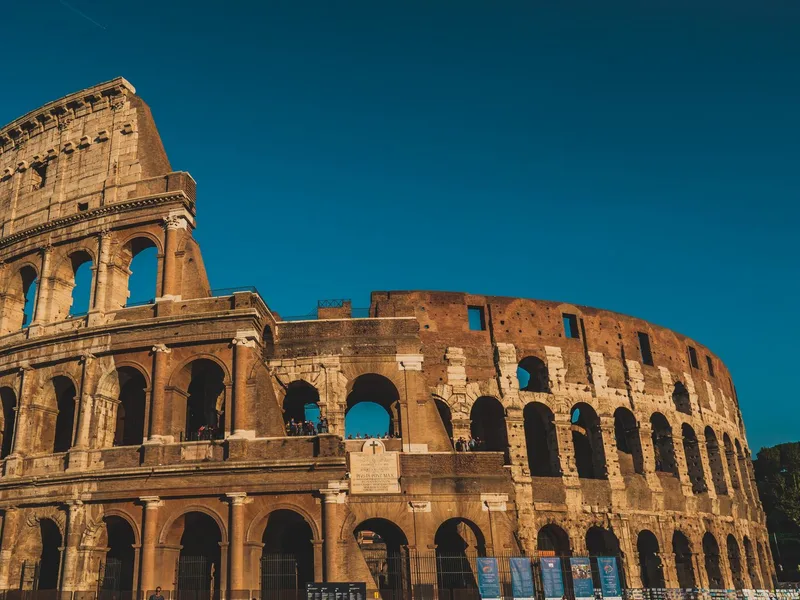
Morning: the Colosseum, at opening. Book the 08:30 slot. The site is emptiest, the light is better than at midday, and by eleven the crowd has trebled. Allow ninety minutes for the amphitheatre itself, or closer to two and a half hours with the arena floor and hypogeum.
Metro line B to Colosseo drops you at the north side. Bring a bottle — there are nasoni drinking fountains throughout — and travel light, because there are airport-style scanners at every entrance and the bag check is slow.
Late morning: Roman Forum and Palatine Hill. Both are on your Colosseum ticket, and skipping them is the second most common mistake visitors make. The Forum was the political centre of the ancient city; the Palatine above it is where the emperors actually lived, and it has the better views and a fraction of the crowd.
The entrance is on Via Sacra and Via di San Gregorio, separate from the Colosseum's own turnstiles — five minutes' walk. Budget ninety minutes minimum. There is very little shade, so in summer this is the part of the day to move briskly through.
Lunch: Monti. Walk north into Monti, ten minutes and a complete change of atmosphere. This is where you eat rather than in the streets immediately around the Colosseum, where the food is priced for people who don't know better.
Afternoon: rest, then Capitoline Hill. Go back to the hotel between two and four, particularly in summer. When you come out, walk up to the Capitoline Hill — Michelangelo designed the piazza — and go around the right-hand side of Palazzo Senatorio to the terrace, which gives you the single best free view over the Forum, with the Colosseum framed at the end. Sunset here is the shot.
The Capitoline Museums are worth an hour if you have energy; the she-wolf and the Marcus Aurelius bronze are both here.
Evening: dinner in Monti. Stay in the neighbourhood. Wine bars around Via Urbana and Via del Boschetto, and a piazza where people sit out. You've walked a long way today.
Day 2 — The Vatican and the Centro
Early morning: Vatican Museums. Book the earliest slot available. The route through to the Sistine Chapel is long, one-directional and crowded, and the difference between 08:00 and 11:00 is the difference between walking and shuffling.
Be strategic: the museums hold an enormous amount, and trying to see all of it before the Sistine Chapel means arriving at the ceiling exhausted. Pick two or three things you actually care about — the Raphael Rooms and the Gallery of Maps are the usual answers — and move through the rest at pace.
In the Sistine Chapel: no photography, no talking, and it is enforced by guards who say so loudly and often. Find a spot along the wall, sit if there is space, and look up for a while. Most people spend four minutes here. Give it twenty.
Late morning: St Peter's Basilica. Free, and the most impressive interior in the city. There is a passage from the Sistine Chapel straight through to the basilica that saves re-joining the security queue in the square, but it is reserved for guided groups — if you're visiting independently, expect to walk around to St Peter's Square and queue again (twenty to forty minutes, and far faster than the museum queue).
Dress code is enforced: shoulders and knees covered, no exceptions, and people are turned away every day in July. The dome climb is separate and paid, 551 steps or a lift for part of it, and the view is the best in Rome.
Lunch: Prati. Walk north out of the Vatican into Prati, where the restaurants serve locals rather than the basilica queue.
Afternoon: the centro on foot. This is the best walk in Rome and it is entirely free. A natural sequence:
Castel Sant'Angelo and across the Ponte Sant'Angelo with Bernini's angels → Piazza Navona → the Pantheon (€5 since 2023; twenty minutes inside is plenty) → the Trevi Fountain → the Spanish Steps.
That is about two hours with stops, all on foot, all within a compact area. Note that the Trevi basin now charges €2 between 9am and 10pm — you can see the whole fountain free from the upper level, and the basin is free after 10pm, which is the better visit anyway.
Evening: dinner in the centro, then the Trevi after 10pm. Eat a few streets back from the monuments, then walk to the Trevi late, when the fee lifts and the crowd has gone. Floodlit, half-empty, and free.
Day 3 — Borghese, Trastevere and Testaccio
Morning: Galleria Borghese. Your booked slot. Two hours, and it is the best two hours of art in Rome — Bernini's Apollo and Daphne and The Rape of Proserpina, which do things with marble that shouldn't be possible, plus six Caravaggios.
Afterwards, walk out into Villa Borghese — Rome's big central park, with rowboats on the lake and bikes for hire. The Pincio terrace at the southern end looks out over Piazza del Popolo and across the rooftops.
Lunch and afternoon: Trastevere. Cross the river. Trastevere in the afternoon, before the evening crowd arrives, is at its best: cobbled lanes, ivy, washing lines, and Santa Maria in Trastevere, whose twelfth-century gold mosaics are free to see and consistently overlooked.
If you have energy, the walk up the Gianicolo hill gives you the widest panorama of the city.
Evening: Testaccio. Take the tram or walk to Testaccio for dinner. This is where Roman food comes from — the old slaughterhouse district that produced cucina romana — and it is where you eat the definitive versions of carbonara, cacio e pepe, amatriciana and coda alla vaccinara. Prices are half what you'd pay near the Pantheon and the cooking is better.
If you'd rather stay in Trastevere, that works too; you'll pay a little more and eat slightly less well, but you'll have a shorter walk home.
If You Only Have Two Days
Cut Day 3 and redistribute:
- Day 1 unchanged — Colosseum, Forum, Palatine, Capitoline terrace, Monti.
- Day 2 — Vatican in the morning, centro walk in the afternoon, Trastevere for dinner.
You lose the Borghese, which is a real loss, and Testaccio, which is a smaller one on a first visit. Everything else survives. Don't try to compress three days into two by adding stops — you will simply have a worse version of both days.
If It Rains
Rome handles rain badly on the street — the sampietrini cobbles get slippery and the drainage is medieval — but it has more indoor options than almost any city.
- The Pantheon in the rain is the single best weather-dependent sight in Rome: water falls through the oculus and drains through nineteen-hundred-year-old holes in the floor.
- Swap the Forum for the Capitoline Museums or Palazzo Massimo, whose Roman frescoes and mosaics are extraordinary and almost always quiet.
- Centrale Montemartini — classical sculpture displayed among the turbines of a decommissioned power station. Strange, brilliant, and empty.
- Churches, all free: San Luigi dei Francesi for three Caravaggios, Santa Maria della Vittoria for Bernini's Ecstasy of St Teresa, San Clemente for its stacked layers of Rome going down three levels.
Practical Notes for All Three Days
Wear proper shoes. You will cover 15–20km a day on uneven stone. This is the advice people ignore and then regret by Tuesday afternoon.
Refill your water. The nasoni street fountains run continuously with cold, clean, free drinking water. There are around 2,500 of them and buying bottled water in Rome is close to a self-inflicted injury.
Coffee standing up costs a third of coffee sitting down. Both are legal and posted; the difference is the table service charge.
Book restaurants for dinner, particularly Thursday to Saturday. The good places in Testaccio and Trastevere fill up.
Watch your pockets at the Termini and on Metro line A, at the Trevi, in the Colosseum queue, and on buses 40 and 64 — a zipped bag worn in front handles nearly all of it.
Don't over-plan the evenings. The best hours in Rome are between seven and nine, walking without a destination while everyone else is doing the same thing.