All Guides/shopping
shopping · 6 min read
Best Markets in Rome: Food, Flea & Vintage
Rome's best markets — the Testaccio food market, Porta Portese's Sunday flea market, Esquilino's multicultural hall, and Campo de' Fiori. Opening days, what to buy, and what to skip.
By Todo Rome · Updated 2026-09-10
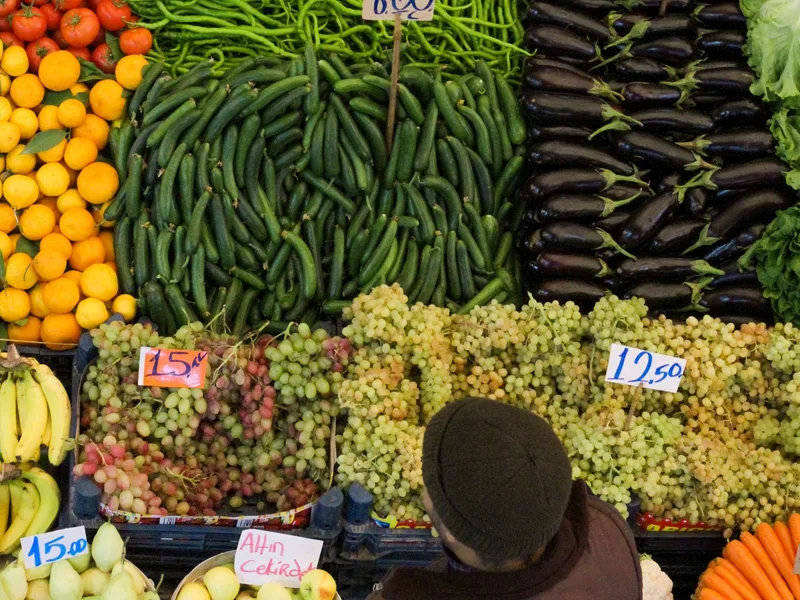
Romans call the local ones mercati rionali, neighbourhood markets, and they are still where a lot of the city buys dinner. They fall into three quite different categories and the trip worth making depends entirely on which you're after.
Briefly: go to Testaccio to eat, Porta Portese on a Sunday morning to hunt, Esquilino for anything Italian shops don't stock, and treat Campo de' Fiori as a photograph rather than a shopping trip.
At a glance
| Market | When | Best for |
|---|---|---|
| Mercato di Testaccio | Mon–Sat, mornings to early afternoon | Eating; the best market food in Rome |
| Porta Portese | Sundays only, ~06:30–14:00 | Vintage, antiques, bric-a-brac |
| Nuovo Mercato Esquilino | Mon–Sat, mornings | Spices, fish, international produce |
| Campo de' Fiori | Daily except Sunday, mornings | Photographs; a quick walk-through |
| Monti vintage shops | Most days, afternoons | Curated secondhand, no timing needed |
Mercato di Testaccio: go hungry
This is the one to prioritise. Rome's best covered food market rebuilt itself into a modern hall in 2012 without losing its neighbourhood character — produce stalls run by the same families for generations, alongside a cluster of counters that have made it the best place in the city to eat lunch for under fifteen euros. Go hungry and eat standing up, the way the regulars do.
The counters are the point. Mordi e Vai does the famous one: allesso di scottona, boiled beef in its own juices, packed into a roll until the bread gives up. It's a former butcher's stall doing what Roman street food actually is rather than what it looks like on a menu, and it costs about €5. Elsewhere in the hall: supplì, the fried rice balls with a string of mozzarella in the middle that every Roman child grows up on; trapizzino, invented a few streets away; fresh pasta cooked to order; and a very good pizza al taglio counter, sold by weight and cut with scissors.
Timing matters here more than anywhere else. Early morning is for produce and the hall is quiet. From about half eleven the food counters get going and the queue fills with people in work clothes, which is always the signal you want. By three most of them have sold what they made and shut. There's no evening trade at all.
Open: Monday to Saturday, roughly 07:00–15:30. Closed Sundays. Getting there: Metro B to Piramide, then seven minutes' walk.
Porta Portese: Sunday morning only
Europe's largest flea market takes over the streets from Porta Portese along the Trastevere side of the river every Sunday morning, and the scale is genuinely hard to convey — well over a kilometre of stalls selling vintage clothing, antiques, records, tools, bicycle parts, phone cases and a substantial quantity of outright junk.
Arrive before nine. That isn't a soft suggestion, it's the whole strategy. The dealers pick over each other's stock at dawn, the crowds become uncomfortable by eleven, and the good vintage goes early. By noon you are shuffling shoulder-to-shoulder past the phone-case stalls.
Bargaining is expected, particularly on anything without a marked price. Start around half and settle near two-thirds. Doing it politely in bad Italian is fine and generally welcomed; quanto viene? (how much does it come to?) will get you further than pointing.
Keep your bag zipped and in front of you. Porta Portese is the single most pickpocketed spot in Rome after the 64 bus. Crowded, distracted, everyone's hands full: exactly the environment thieves want. Take a small amount of cash and leave the rest at the hotel.
Open: Sundays only, roughly 06:30–14:00. Getting there: Tram 8 to Porta Portese, or a fifteen-minute walk south along the river from Trastevere.
Nuovo Mercato Esquilino: the one chefs use
The covered market off Piazza Vittorio is where Rome goes for everything Italian markets don't sell. It serves the city's Chinese, Bangladeshi, Indian and North African communities, and as a result it has the best fish counters in Rome, whole stalls of spices, halal butchers, and produce that never appears in Testaccio.
It isn't a tourist destination and doesn't pretend to be. No market-food scene, no English signage, and a hall that's functional rather than pretty. Come if you're cooking, if you want to see the least postcard-like part of central Rome, or if you simply want a chilli that isn't the one chilli Italian supermarkets stock.
Open: Monday to Saturday mornings. Getting there: Metro A to Vittorio Emanuele.
Campo de' Fiori: photogenic, not practical
The daily morning market in Campo de' Fiori occupies one of Rome's best squares, with Giordano Bruno's statue glowering north towards the Vatican from the spot where he was burned in 1600. Over the past two decades it has become almost entirely visitor-facing.
What's on the stalls now is dried pasta in tricolour packaging, limoncello, bottled sauces, tea towels and flowers. The produce that remains is priced for people who aren't coming back tomorrow.
Go for the square, the light in the morning, and the streets around it, which hold genuinely good food shops. Roscioli is two minutes away and is one of the best salumerie in Italy. Just don't plan your shopping around the stalls themselves.
Open: Monday to Saturday mornings, closed Sunday. By early afternoon the square is cleared and becomes a bar terrace.
Vintage and secondhand without a Sunday
If your trip doesn't include a Sunday, or Porta Portese sounds like too much, Monti solves it. The streets around Via Urbana and Via del Boschetto hold Rome's densest cluster of permanent vintage and secondhand shops: curated, calmer, dearer than a flea market and considerably less work.
Most open in the late morning, close for a couple of hours in the afternoon, and reopen until around eight. See our Monti neighbourhood guide for the wider district.
There's also a small, well-established vintage market — the Mercato Monti Urban Market — in a hotel space on Via Leonina at weekends, worth checking if you're in the area on a Saturday or Sunday.
Practical notes
Cash is still the norm at market stalls, even in a city that has otherwise gone card-friendly. Bring small notes. Nobody at Porta Portese wants to break a fifty at eight in the morning.
Mornings, always. Almost every market in Rome is a morning institution. Testaccio's food counters are the only ones with a meaningful lunchtime trade, and essentially nothing runs into the evening.
Sundays are the exception in both directions. Porta Portese only happens on a Sunday, and Testaccio, Esquilino and Campo de' Fiori are all shut. Plan around it. That mismatch is the single most common wasted trip we hear about.
August closures are real. Many stallholders take the second and third weeks of August off, as does much of the city; look for the chiuso per ferie sign taped to the shutter. The markets still open, just thinned out.