All Guides/practical
practical · 6 min read
Free Things to Do in Rome (Updated for 2026)
Rome added new entry fees in 2026 — but the best of the city is still free. Caravaggios, Bernini, the Forum from above, and what just stopped being free.
By Todo Rome · Updated 2026-09-09
What Just Stopped Being Free
Worth getting this out of the way first, because 2026 changed the picture and a lot of "free Rome" lists are now wrong.
- The Trevi Fountain basin — €2 since 2 February 2026, between 9am and 10pm. The piazza and the view of the fountain remain free at all times, and the basin itself is free from 10pm to 9am.
- Five civic sites went to €5 on 1 February 2026 for non-residents, including Villa di Massenzio on the Appian Way.
- The Pantheon — €5 since 2023, which still catches people out.
Everything below this line is, as of writing, genuinely free.
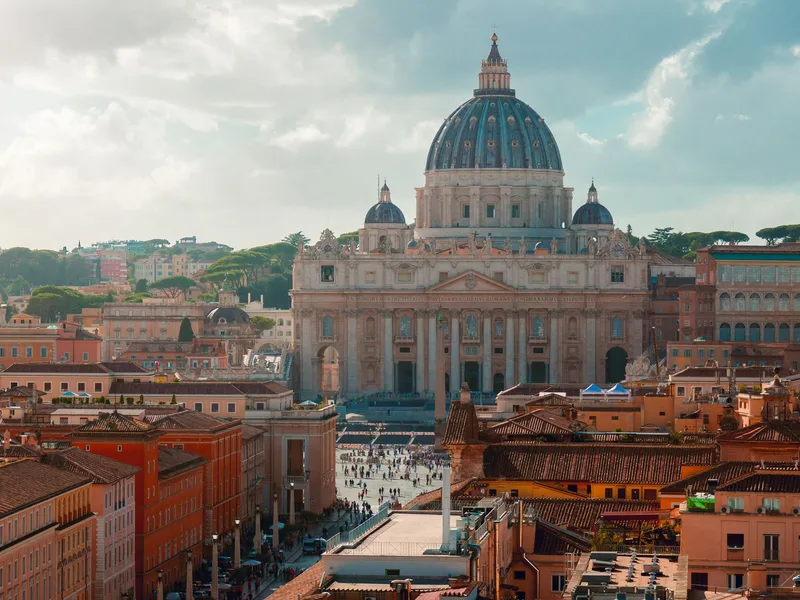
St Peter's Basilica
The most impressive interior in Rome, and it costs nothing.
Michelangelo's Pietà is just inside on the right, behind glass since 1972. Bernini's baldacchino stands over the papal altar, twenty metres of bronze — much of it, according to Roman tradition, taken from the Pantheon's portico. The scale is difficult to process until you notice that the cherubs holding the holy water stoups are the size of adults.
Free. The dome climb is separate and paid. Dress code is enforced — shoulders and knees covered — and people are turned away daily in summer. Go early or late; the security queue in the square is at its worst late morning.
The Churches, Which Are the Real Secret
Rome has around nine hundred churches and they are, collectively, the best free art collection in Europe. No tickets, no booking, often no other visitors.
San Luigi dei Francesi — three Caravaggios in one chapel, including The Calling of St Matthew. There is a light box; bring a coin. That these hang in a working parish church rather than a museum is the most remarkable thing about Rome's art.
Santa Maria della Vittoria — Bernini's Ecstasy of St Teresa, staged in a chapel designed as a theatre, with sculpted members of the Cornaro family watching from opera boxes on either side.
San Clemente — three cities stacked vertically. A twelfth-century basilica on top of a fourth-century church on top of a first-century Mithraic temple with an underground spring you can still hear. The upper church is free; the lower levels are paid and worth it.
Santa Maria in Trastevere — twelfth-century gold mosaics, one of the oldest churches in Rome, on a piazza that is the social centre of the neighbourhood.
Santa Maria del Popolo — two more Caravaggios, plus a Raphael-designed chapel.
Santa Maria Sopra Minerva — the only Gothic church in Rome, with a Michelangelo Christ the Redeemer and Bernini's elephant obelisk outside.
San Pietro in Vincoli — Michelangelo's Moses, and the chains said to have held St Peter.
The Piazzas and Fountains
Still free, still the best thing about the city.
Piazza Navona, built on the footprint of Domitian's stadium, with Bernini's Four Rivers fountain in the middle. Campo de' Fiori, a produce market by morning and a drinking square by night. Piazza di Spagna and the Spanish Steps — you may sit on them, but not eat or drink there; the fine is real. Piazza del Popolo, with its Egyptian obelisk and twin churches.
And the Trevi Fountain, free from the upper level at any hour, and free entirely between 10pm and 9am — which is when you should be going anyway.
Viewpoints
The Capitoline terrace. Walk up Michelangelo's ramp to the Campidoglio, then around the right side of Palazzo Senatorio. The Forum opens up below with the Colosseum framed at the end. This is the best free view in Rome and most visitors miss it because it isn't signposted.
The Gianicolo (Janiculum Hill). The widest panorama of the city, above Trastevere. A cannon is fired at noon every day. Best at sunset.
The Aventine keyhole. Look through the keyhole of the Knights of Malta priory door and St Peter's dome sits perfectly framed at the end of an avenue of hedges. There is usually a short queue. Next door, the Giardino degli Aranci — the orange garden — has one of the loveliest views over the city and is almost never crowded.
The Pincio terrace at the edge of Villa Borghese, looking over Piazza del Popolo.
Ponte Sant'Angelo at dusk, with Bernini's angels along the parapet and the dome of St Peter's downriver.
Ancient Rome Without a Ticket
You cannot enter the Forum or the Colosseum for free, but you can see a great deal of ancient Rome without paying anything.
The Forum from Via dei Fori Imperiali — the road runs alongside the whole site, and the view down into it is free and excellent.
The Colosseum from outside. The exterior is the famous part. Walk around it at night when it is floodlit and the crowds are gone.
The Pantheon's portico — sixteen original granite columns, each a single piece of Egyptian stone. You can stand under them and see into the rotunda without paying.
Trajan's Column, the Theatre of Marcellus (a Colosseum prototype with flats built into the top), the Largo di Torre Argentina temples — visible from the street, and now home to Rome's best-known cat sanctuary.
The Appian Way on a Sunday, when it closes to traffic. You can walk on original Roman basalt paving. Note that Villa di Massenzio along it now charges €5, but the road itself is free.
Free Museum Days
The first Sunday of the month, state museums are free — including the Colosseum, Forum, Palatine, Galleria Borghese and Palazzo Massimo.
The honest caveat: everybody knows this. Queues are long, the Borghese still requires its timed reservation and those vanish immediately, and the Colosseum on a free Sunday is an experience in crowd management rather than archaeology. Worth it if you're on a tight budget and have patience; not worth restructuring a short trip around.
Neighbourhoods to Walk
Free by definition, and arguably the best use of a day in Rome.
Trastevere in the late afternoon, before the evening crowd. Monti, behind the Forum, for vintage shops and a piazza that's genuinely local. Testaccio for the market — free to walk through, and the best food in Rome is sold in it. Pigneto for street art and Pasolini's Rome. Ostiense for the gasometer and large-scale murals. The Jewish Ghetto, one of the oldest in Europe, and the walk across to Tiber Island.
Water, Which Is Free and Cold
Rome has around 2,500 nasoni — cast-iron street fountains running continuously with cold, clean drinking water piped from the same aqueducts that supplied the ancient city. There is a small hole on the top of the spout: block the main opening with your finger and the water arcs upward as a drinking fountain.
Carry a refillable bottle. Buying bottled water in Rome is one of the more avoidable expenses in the city, and the nasone water is better.
A Free Day in Rome
If you wanted to spend nothing at all, this works:
Morning — St Peter's Basilica, then walk across Ponte Sant'Angelo into the centro. Piazza Navona, San Luigi dei Francesi for the Caravaggios, the Pantheon's portico.
Lunch — pizza al taglio, sold by weight, a few euro. Not technically free, but close.
Afternoon — walk to the Capitoline terrace for the Forum view, down past the Theatre of Marcellus into the Ghetto, over to Tiber Island.
Late afternoon — cross to Trastevere, Santa Maria in Trastevere, then up the Gianicolo for sunset.
Evening — walk back through the centro to the Trevi after 10pm, when the basin is free and empty.
That is a full and genuinely good day in Rome for the price of lunch.